

Understanding the Core Differences Between Cartridge Types
The Best Rifle Ammo for Accuracy, Power, and Hunting in 2025
What if the single most decisive factor in your rifle’s accuracy was the tiny, unassuming cartridge you feed it? Rifle ammo is a precisely engineered system—a case, primer, powder, and bullet working in perfect unison to convert controlled explosion into forward momentum. Matching the right bullet weight and profile to your barrel’s twist rate unlocks exceptional downrange precision, while selecting a flat-shooting round lets you hold dead-on at distances that would humble lesser loads. Ultimately, the right ammunition transforms a good rifle into a dependable, long-range tool, so choose it with the same care you give your trigger 7mm-08 Ammo for Sale finger.
Understanding the Core Differences Between Cartridge Types
Understanding the core differences between cartridge types for rifle ammo begins with the case design and shoulder angle, which dictate powder capacity and pressure curves. A rimless, bottlenecked case, like the .308 Win, feeds reliably from magazines, while a rimmed cartridge, such as the .30-30, headspaces on its rim and suits lever-action tubes. The bullet diameter, case length, and overall cartridge length (COAL) determine whether a round fits a short-action or long-action receiver; short actions favor lighter, faster projectiles, whereas long actions accommodate heavier, slower bullets for extended range. Neck length influences bullet grip and concentricity, while case taper affects extraction ease in dirty chambers.
Choosing between a standard and magnum case is a trade-off: magnums burn more powder for velocity but generate sharper recoil and faster barrel erosion.
Finally, rimfire versus centerfire primers separate low-pressure training rounds from high-pressure hunting or precision loads, altering reloadability and terminal performance.
Full Metal Jacket vs. Hollow Point: Which Does What?
In rifle ammo, the Full Metal Jacket vs. Hollow Point choice dictates terminal behavior. An FMJ’s lead core is fully encased in copper, so it punches a clean hole and penetrates deeply without expanding, ideal for target practice or barrier shooting. A hollow point’s nose cavity initiates rapid expansion upon hitting soft tissue, dumping energy and creating a wider wound channel, making it superior for defensive or hunting use. *However, a hollow point may under-penetrate through thick cover, while an FMJ can over-penetrate in close quarters.*
Q: Full Metal Jacket vs. Hollow Point: which does what for daily range use?
A: For paper or steel, FMJ offers lower cost and reliable feeding; hollow points are reserved for Rifle Ammo for Sale live-target scenarios where stopping power matters more than penetration.
Soft Point and Boat Tail Designs: When Accuracy or Expansion Matters
When you’re sorting through rifle ammo, the bullet’s shape and tip do heavy lifting. Soft point and boat tail designs directly balance expansion against long-range stability. A soft point’s exposed lead tip mushrooms on impact, making it a go-to for hunting where quick energy transfer 6.5 PRC Ammo for Sale matters over pinpoint consistency. A boat tail, with its tapered rear, slices through air better, shrinking drag and holding velocity for distant targets—ideal when precision trumps terminal effect. Combine both, and you get a hybrid: a soft point for reliable expansion, a boat tail for flatter trajectory. The trade-off is that boat tails can be slightly less lethal up close if expansion lags.
Q: When should you pick a soft point over a boat tail for accuracy?
A: If your shots are under 200 yards, a plain soft point is fine—expansion wins. But for 400+ yards, choose the boat tail (even with a soft point tip) to fight wind drift.
Matching the Right Bullet Grain Weight to Your Barrel Twist Rate
Barrel twist rate dictates the optimal bullet grain weight for stabilizing rifle ammo. A slower 1:12 twist typically stabilizes lighter 40–55gr projectiles, while a faster 1:7 or Ammunition for Sale 1:8 twist is required for heavier 62–77gr bullets, especially in .223/5.56. Ignoring this match causes keyholing or poor accuracy. To test, shoot groups from a rested position with two or three grain weights; the tightest group indicates your barrel’s sweet spot. Never assume a heavier bullet is more accurate—it is only accurate if your twist can stabilize it. Q&A: What happens if you use a bullet too heavy for your twist? The bullet yaws in flight, producing oval holes in targets and erratic trajectory, so stick to the grain range your twist rate was designed for.
Light vs. Heavy Projectiles: How Velocity and Drop Change
When comparing light versus heavy projectiles, velocity and drop diverge sharply due to muzzle energy distribution. A lighter bullet leaves the barrel faster, producing a flatter trajectory at close range, but it sheds speed quickly because of lower sectional density. Conversely, a heavier bullet starts slower, yet maintains velocity better downrange, reducing wind drift and drop at extended distances. This means your zeroing distance should shift based on grain weight, as a 55-grain load may hit high at 100 yards while a 77-grain load requires a longer zero for similar impact. Practical drop testing, not ballistic charts alone, reveals that heavy projectiles arc more initially but overtake light ones past 300 yards, altering your holdover calculations significantly.
Reading Your Rifle’s Twist Rate to Stabilize the Bullet
To stabilize the bullet, you’ve got to read the twist rate stamped on your barrel—usually something like “1:9” or “1:12”—which means one full rotation every 9 or 12 inches. Faster twists (1:7) handle heavier, longer bullets, while slower twists (1:12) favor light, short pills. Check your barrel’s markings or your manual, then match grain weight accordingly; a 55-grain in a 1:9 will fly great, but a 77-grain may tumble. If you’re unsure, test a few weights at the range—keyholing targets tell you instantly you’re off. This is the core of reading your rifle’s twist rate to stabilize the bullet effectively.
- Locate the twist rate on the barrel’s stamp or the owner’s manual.
- Use the Miller stability formula to confirm your bullet length vs. twist.
- Start with the manufacturer’s recommended grain range for your twist.
- Watch for oval-shaped holes in paper—a sign of poor stabilization.
Choosing the Correct Caliber for Your Specific Hunting or Target Goal
Selecting rifle ammo begins with matching caliber to the animal’s size and the engagement distance; a .223 Remington suits varmints, while a .30-06 Springfield handles elk at moderate range. For target work, prioritize cartridge consistency and barrel life over raw power—the 6mm Creedmoor excels in both, whereas a .308 Win offers abundant, affordable match-grade options. Heavier bullets stabilize better in wind at long range, but they recoil more, which can hurt precision over a long session. Before committing, verify that your rifle’s twist rate stabilizes your chosen bullet weight. Match the caliber to the target’s vital zone and your maximum ethical shooting distance, not to marketing hype. Q: For a 200-yard prairie dog hunt, which caliber minimizes meat damage? A: A .22-250 with a light, frangible varmint bullet—it delivers flat trajectory without over-penetrating.
Varmint Rounds vs. Large Game Loads: Terminal Performance Trade-offs
Varmint rounds prioritize rapid, explosive fragmentation to minimize pelt damage and eliminate small pests instantly, using thin-jacketed bullets at high velocity. Large game loads instead rely on deep penetration and weight retention, employing bonded or monolithic bullets that expand reliably but hold together through bone and muscle. The trade-off is stark: varmint projectiles often fragment completely within a few inches of tissue, causing massive shock but shallow wound channels, while large-game slugs may pass through a coyote with minimal energy transfer. Choosing between them hinges on whether your target requires immediate dispatch at close range or sustained penetration for a broadside elk shot at 300 yards. Ballistic tip varmint ammo fails on heavy muscle, whereas a 180-grain soft point over-penetrates a prairie dog.
Long-Range Precision Cartridges: Selecting for Wind Drift and Ballistic Coefficient
For long-range precision cartridges, selecting primarily hinges on minimizing wind drift, which is dictated by the projectile’s ballistic coefficient (BC) and muzzle velocity. A higher BC resists atmospheric deceleration more effectively, preserving downrange velocity and reducing lateral displacement from crosswinds. Compare cartridges like the 6mm Creedmoor or 6.5 PRC, which offer superior sectional density and BC versus flatter-shooting but wind-prone options. Examine a bullet’s G1 or G7 BC value at 1,000 yards, not just at the muzzle, as drag models diverge. Also factor in twist-rate stability; a faster twist ensures the longer, high-BC bullet remains gyroscopically stable. Ultimately, a heavier bullet with high BC and moderate velocity often outperforms a lighter, faster load in crosswinds.
- Review G7 BC for supersonic retention and wind deflection at 1,000 yards.
- Match twist rate to the bullet’s length-to-diameter ratio for optimal stability.
- Analyze drop and drift tables using a ballistic solver for your specific altitude and temperature.
- Prioritize aerodynamic efficiency over raw velocity for consistent long-range hits.
Decoding Pressure Ratings and Powder Types in Factory Loads
Decoding pressure ratings in factory rifle ammo begins with the SAAMI or CIP specifications, which define maximum average pressure in PSI or CUP. A published rating like 65,000 PSI indicates the peak chamber pressure the cartridge is designed to withstand safely, but real-world pressure curves vary with powder burn rate. Faster-burning powders spike pressure quickly, ideal for light bullets and shorter barrels, while slower-burning extruded or spherical powders build pressure more gradually, optimizing velocity with heavy projectiles. Factory loads list powder type generically—often “ball” or “flake”—but the burn rate index, not the physical shape, dictates pressure consistency. A high-pressure load with a slow powder can produce velocity flatness but risks temperature sensitivity; a low-pressure load with fast powder may cycle reliably but lose long-range energy. Always cross-reference the pressure rating with the recommended powder charge weight range for your specific rifle, as chamber dimensions and throat length alter effective pressure despite identical box data.
Standard Pressure vs. +P Loads: What Your Action Can Safely Handle

Standard pressure rifle loads operate within SAAMI-established limits, ensuring your bolt, lever, or semi-auto action cycles with a built-in safety margin. +P loads, however, push pressure higher—often 10–15% above standard—which can batter lugs, stretch bolt faces, and accelerate wear in older or inherently weaker actions. Before firing +P, verify your firearm’s manufacturer rating; modern rifles with heat-treated steels and full-diameter bolts generally handle them, but vintage military surplus or lightweight aluminum-alloy actions may not. Your action’s bolt lug shear strength and locking lug engagement determine true +P tolerance. If you’re unsure, stick to standard pressure—accuracy and component life improve without the Handgun Ammo for Sale extra stress.
Q: Can a standard hunting rifle safely fire +P loads all the time?
A: Only if the manufacturer explicitly stamps or states “+P approved.” Otherwise, occasional use may pass, but constant +P exposure risks premature headspace erosion and possible lug setback. Rimfire Ammo for Sale Treat +P as a specialty tool, not a daily diet.
Blisters, Flakes, and Sticks: How Powder Burn Rate Affects Recoil and Muzzle Velocity
Powder geometry dictates burn rate, which directly shapes recoil and muzzle velocity. Fast-burning specialty sports flakes ignite instantly, spiking chamber pressure early; this sharp impulse produces a snappy, harsh recoil kick but often delivers lower velocity due to early pressure decay. Slower-burning sticks sustain pressure longer, pushing the bullet down the bore with a smoother, longer push, yielding higher muzzle velocity and a more diffused recoil pulse. Blistered or deformed powder grains, however, disrupt this intended burn curve—irregular surfaces increase burn rate unpredictably, raising peak pressure and recoil while reducing velocity consistency. Powder burn rate tuning is therefore a trade-off between felt impulse and projectile speed. Choosing between flake and stick powders means accepting either a violent shove or a sustained shove as your physical feedback.
- Match burn rate to barrel length for complete combustion.
- Check for blisters or fractures to avoid pressure spikes.
- Test velocity and recoil side-by-side to verify the load’s character.
Evaluating Brass Quality, Primer Seating, and Round Consistency
Evaluating brass quality begins with inspecting case necks for uniform thickness and checking primer pockets for tightness, as loose pockets compromise ignition consistency. For rifle ammo, primer seating demands a flush or slightly recessed fit—proud primers cause misfires in bolt guns and slam-fires in semi-autos. Measure seating depth with a comparator; variance beyond 0.002 inches disrupts pressure curves. Round consistency hinges on case length and neck tension: trim to spec and chamfer inside mouths to avoid bullet shaving. Annealed shoulders resist split necks across reloads, extending brass life. Weigh finished rounds—a spread over 1 grain signals powder or bullet weight anomalies. Finally, gauge every completed cartridge in a chamber tool; zero-tolerance failures indicate poor resizing or damaged rims. This disciplined inspection yields tight groups and reliable extraction, making meticulous brass prep non-negotiable for precision rifle work.
Virgin vs. Reloaded Casings: Impact on Chambering and Case Life
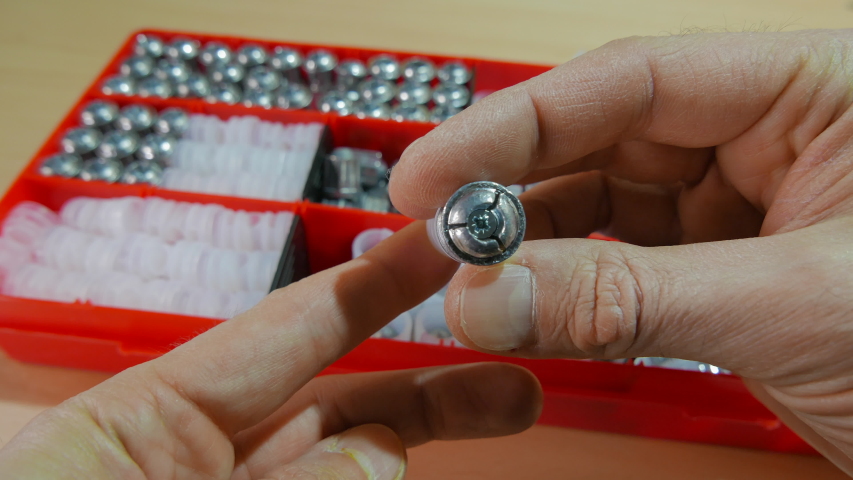
Virgin casings, fire-formed to your chamber, require minimal neck-sizing and thus offer the most consistent chambering and longest case life, as the brass isn’t work-hardened by repeated resizing. Reloaded casings, conversely, are subjected to sizing dies that can introduce runout, causing stiff bolt close and accelerated case-head separation if you over-lube or excessively size the base. Each full-length resize cycle compresses the brass, reducing its elasticity and leading to premature neck cracks or primer-pocket loosening after roughly five to eight firings, whereas virgin brass often endures ten-plus loads if you only neck-size. The key is measuring case growth: trim when length exceeds spec, and anneal every third firing to restore ductility, ensuring the shoulder doesn’t push forward and impede cam-over.
Q: How does using reloaded casings affect chambering compared to virgin brass?
A: Reloaded casings, especially after multiple resize cycles, can develop uneven shoulder setback and body spring-back, causing tighter chambering and requiring more bolt force. Virgin brass, being uniformly annealed and dimensionally true from the factory, chambers effortlessly, but it will lose that edge after the first firing unless you maintain a minimal-bump full-length sizing approach.
Primer Hardness and Crimp: Avoiding Misfires in Semi-Automatic Platforms
In semi-autos, a soft primer can actually flow backward into the firing pin channel under pressure, locking your bolt and stopping the gun cold. That’s why 6.5 Creedmoor Ammo for Sale proper primer hardness and seating depth matter more than raw round count. You also need a firm, consistent crimp to keep the bullet from being pushed back into the case during feeding, which changes internal pressure and can cause light strikes. When reloading rifle ammo, test a few rounds with your gun’s bolt release—if they seat easily but don’t set back, your crimp is right. Aim for primers seated 0.003–0.005 inches below the case head, and you’ll dodge most misfire headaches.
Tough primers, correct seating depth, and a solid crimp are your trio for reliable ignition Shotgun Ammo for Sale in semi-automatic rifles.
Storing and Handling Your Ammunition to Preserve Shelf Life
To keep your rifle ammo shooting crisp for years, treat it like a sensitive piece of gear. Store it in a cool, dry place—think a stable closet or interior room, not a hot garage or damp basement. Temperature swings cause condensation inside the case, which is the enemy of the powder and primer. Keep rounds in their original boxes or a sealed ammo can with a desiccant pack; humidity above 50% will accelerate corrosion on brass and steel cases, leading to extraction issues. Handle cartridges by the case body, not the bullet tip, to avoid denting the projectile or pressing it deeper into the neck, which spikes pressure. Always wipe off light surface moisture with a dry cloth before returning them to storage, and avoid mixing loose rounds with oils or solvents—they can seep past the primer and kill the ignition. Rotate your stock so older rifle ammo gets shot first, keeping your supply fresh.
Temperature Swings and Humidity: Protecting Powder from Degradation
Temperature swings are the silent killers of rifle ammo, as the propellant inside expands and contracts, which can crack the grain structure and alter 7mm WSM Ammo for Sale burn rates, causing inconsistent accuracy. To prevent this, avoid storing ammo in attics or garages where daily temperature fluctuations are extreme; a stable, cool closet is far better. Humidity control is crucial for protecting powder from degradation, since moisture absorption leads to corrosion of the brass and a breakdown of the nitrocellulose, reducing muzzle velocity. Use desiccant packs in your ammo cans and check them every few months, replacing them when they feel saturated. A simple hygrometer in your safe will tell you if you’re above 40% relative humidity, at which point you need to act.
Q: What is the safest way to handle humidity in an ammo can?
A: Pop a reusable desiccant canister inside, but never seal the can while the ammo is cold from outside—let it acclimate to room temperature first, or you’ll trap condensation inside.
Rotating Your Stockpile and Checking for Corrosion or Setback
Rotating your stockpile ensures that older rifle ammunition is used first, preventing propellant degradation from extended storage. By practicing first-in, first-out discipline, you avoid shooting rounds that have lost velocity or consistency due to age. Simultaneously, inspect every cartridge for corrosion, which appears as green or white crust on brass, and for setback, where the bullet is pushed deeper into the case from repeated chambering. A caliper check on overall length catches setback before it causes pressure spikes. Discard corroded rounds immediately, as they compromise case integrity.
- Use the oldest ammo in your next range session, not the newest.
- Wipe down stored cartridges to remove moisture that triggers corrosion.
- Measure cartridge length before loading; reject any round that is 0.01 inch shorter.